maandag 28 december 2015

 DARK REBEL

A fresh current trend is that of new animalics, and  played well and in the right doese, these are certainly sensual.

One perfect example for this is Rodrigo Flores-Roux' 'Dark Rebel' (John Varvatos, 2015), in which we find a pretty extreme castoreum/civet-type animality in the sytle of old-fashioned leathery fougères such as 'Jules' (Dior, 1980) by Jean Martel for castoreum or 'Kouros' (Y. Saint Laurent, 1981) by Pierre Bourdon.

Flores-Roux takes this leathery animality, and dilutes it in his signature style with cardamom and clary sage.
An animalic whiff is present right from the first sniff, but 'Dark Rebel' starts like the boozy '1 Millions' with a rum accord on davana oil, and at the bar we then find the black leather jacket boosted with nutmeg and styrax and softened with fir resin, and then diluted with cardamom and clary sage. The darkness though is due to black pepper and this is carried from top to fond with the modern peppery note of Akigalawood /rotundone.
'Dark Rebel' dries down into a tobacco leaves accord with musk and wood linking to the boozy top some juniper berry note. Longevity and projection are not too outstanding, but the peppery animalic note of 'Dark Rebel' on cardamom and clary sage actually is groundbreaking. So that is quite something that could be extended into a full-blown trend both in feminine and masculine perfumery. Of course the animalic odorants are very oldfashioned and retro, but the context makes them shine! 
Or as John Varvatos would say: "From Darkness comes Light!"

https://youtu.be/BUJgaTqP2cI : this is the 'Dark Rebel' (John Varvatos, 2015) ad clip that makes light out of darkness.

woensdag 25 november 2015

Memo Paris: Scent, Memory, and Serious Romance


Left: Husband and wife John and Clara Molloy of Memo Paris. Right: A fragrance dedicated to John's Irish heritage.(All images courtesy of Memo Paris.)
If the best scents come out of unexpected juxtapositions, the forces behind Memo Paris, a beyond-romantic new fragrance brand traveling here from Paris (where else?) this fall, certainly fit the profile. When Clara and John Molloy—she, Parisian; he, from the Irish countryside—met while dangling on a ski lift, they knew their journey together would certainly involve romance but also travel and creativity.
Memo references memory, says Clara, who serves as creative director for the brand and works with perfumer Alienor Massenet, of International Flavors & Fragrances to create the exquisite, original scents. “Fragrance works like a time machine,” Clara says. ”It has the power to bring you back to a place, to someone you once loved.... Perfume is a souvenir, and Memo is its memory.”
The scents,18 in all, comprise three collections: Les Echappees, Cuirs Nomades, and Graines Vagabondes, launching at Bergdorf Goodman. They always begin with a landscape. “Some destinations call to us in our memories, and some in our dreams,” Clara says. “They could be places you have never been, places you feel you belong to.…Fragrance has kindled an excitement in me similar to that of a journey, a departure.” From their homes in Paris and Geneva, the Molloys travel constantly, and practically every trip inspires a new scent. “‘The journey is the destination’ is our motto,” she says with a smile.


Memo Paris photographer-at-large Guillaume Bonn's Instagram postcards from Kenya.
All images courtesy of Memo Paris.
The fragrance journey began for Clara at age four. “I saw an ad for Fidji, by Guy Laroche, and fell in love with it,” she says. By “it,” she means perfume in general. “Smelling, breathing in a scent, is accepting to leave a safety zone in search of new sensations and tying them to one’s unique experiences. It is about openness and abandonment.”
In 2006, she edited the book 22 Perfumers: A Creative Process, which profiled giants in the fragrance industry, among them Massenet. The experience ignited a desire to start her own perfume company, with Massenet as the nose. “Together, we try to translate our sensations and emotions through scents. We speak the same sensory language. We’re on a constant quest for beauty.”
Packaged in gorgeous heavy-glass bottles and named for exotic destinations around the world, the perfumes—the newest is called African Leather—are deeply original, mysterious, and evocative. Molloy’s favorite non-Memo scent expresses her approach perfectly: “The smell of the Parisian stones after the rain.” Looking forward to more Memo surprises come holiday.

zondag 15 november 2015

Why Drinking Wine Is Like Drinking Koala Pee


Mmm, crisp and fruity, subtle notes of blackberry with a tangy finish of…koala pee? Yes, oenophiles everywhere may be disgusted to learn that there is one component found in both fruitier-smelling wines and the urine of the native Australian herbivorous marsupial, the koala.
Discovered first in koala pee in 1975 and then later in white wine in 1998, the compound wine lactone (3a,4,5,7a-tetrahydro-3,6-dimethylbenzofuran-2(3H)-one) lends a woody or sweet nature to wine. No word yet of how it tastes in koala pee, though.
There are eight possible isomers – molecules with the same chemical formula but different structural arrangements – of wine lactone, but despite the name, only one (see pic) has been found in wine.
So before you throw out that glass of pinot noir in sheer disgust, structurally, you are not drinking koala pee. But fundamentally, you totally are drinking koala pee.

 Chemical structure of the winelactone


Why Drinking Wine Is Like Drinking Koala Pee

vrijdag 6 november 2015


Neurogastronomy : The Science of Taste Perception

Imagine sitting down for a meal after a long day. You're craving delicious comfort food that can lift your spirits with one whiff lingering from the oven. You indulge in a meal that tastes wonderful and leaves you feeling satisfied. Except, instead of macaroni and cheese, you're eating boiled broccoli. And thanks to a new science, the broccoli-loather in you genuinely loves every single bite.

This new science, called neurogastronomy, merges the science and culinary worlds by studying the human brain and the behavior that influences how we experience eating and drinking. First conceived in 2006, the field has now evolved into its own area of learning that delves into the molecular biology of the olfactory receptors, the biochemistry of food preparation, and odor images and the brain flavor system. Essentially, neurogastronomy shakes up how we look at food and taste: Instead of investigating how researchers can alter the taste of food by re-engineering what we eat, this science concentrates on how we can re-wire the brain to perceive food differently. Translation: it's not about genetically modifying carrots to taste better; instead, it is about making our brains think carrots are delicious. But even that aforementioned instance is just one component in the broad and diverse academic specialty.

 Read the whole article by Susmita Baral : www.eater.com/2015/10/19/9553471/what-is-neurogastronomy

woensdag 14 oktober 2015


Is flavour science a positive science, in the 'Wittgensteinean' sense ? 

His Tractatus Logico-Philosophicus consists of numbered propositions in seven sets.The seventh set contains only one proposition, the famous "What we cannot speak about we must pass over in silence." One of the most misunderstood and misused phrases in literature and daily life.


The major theme of the Tractatus as a whole is that fact that propositions merely express facts about the world. The propositions in themselves are entirely devoid of any value. The facts are just the facts. Everything else, everything about which we care, everything that might render the world meaningful, must reside elsewhere because it can not be expressed in logical propositions. 

A properly logical language, and only this, Wittgenstein held, deals only with what is true. Aesthetic judgments about what is beautiful and ethical judgments about what is good cannot even be expressed within the logical language, since they transcend what can be pictured in thought. They aren't facts. 

The book concludes with the lone statement: "Whereof one cannot speak, thereof one must be silent."  This is a powerful message indeed, for it renders literally unspeakable so much of human life. 

That it can be not applied to flavour science is obvious, but nevertheless people try to summarize their sensorial experiences in words. They have a value in the sense that it can help flavorists to focus on the same topic and to have a common language between flavorists and customers. The terms can however never express the total multisensorial experience of fragrance or flavor. 

The following article is a good example of what I mean :


(sorry for the advertisement film in the text of the article)

maandag 12 oktober 2015


Source : www.volatileanalysis.com/blog/what-is-off-odor/


What is Off-Odor?

FunnyOdor_Post-Featured-Image 

The true answer is you’ll know it when you smell it!  Doesn’t have to stink like dead fish or 2 week old ground beef left in the refrigerator, although those certainly are obnoxious.  

Off-odor can be a nice fresh floral smell, like that of a rose, only the rose aroma originates from a batch of freshly roasted pecans.  The rose aroma doesn’t belong there.  It detracts from the richness of deep, warm, roasted pecan aroma.

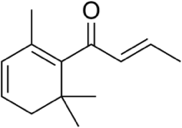
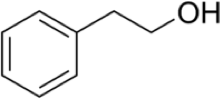
Many off-odor projects we tackle at Volatile Analysis involve issues akin to that of rose-pecan.  Aroma chemistry tells us one very common fragrant molecule that has an aroma similar to rose is 2-phenylethanol.  Others closely associated with rose aroma include cis rose oxide and beta damascenone.

molecule3molecule1                                                                  molecule2                 
Chemical structures of molecules with rose aroma including 2-phenylethanol, cis rose oxide, also known as (2S,4R)-2-(2-Methyl-1-propenyl)-4-methyltetrahydropyran, and beta-damascenone, also known as (E)-1-(2,6,6-Trimethyl-1-cyclohexa-1,3-dienyl)but-2-en-1-one.

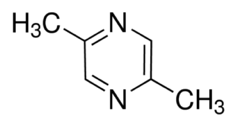
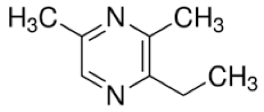
The chemical class most responsible for roasted pecan aroma include pyrazines that develop during the roasting process.  This class of chemicals is also found in roasted coffee, seared meats, chocolate, and many other common products (including tobacco smoke).  They are produced via the Maillard reaction and require the presence of a reducing sugar and an alpha amino acid.  Pyrazines responsible for nutty aroma include the simple ones below, as well as one known as “nutty pyrazine” with the long chemical name (7R)-7-methyl-6,7-dihydro-5H-cyclopental[b]pyrazine.

molecule4                       molecule5
Simple chemical structures associated with roasted, nutty aroma: 2,5-dimethylpyrazine, 3-ethyl-2,6-dimethylpyrazine.

If we were tasked with determining why roasted pecans had a floral, rose off-odor, we would know it likely was due to one of those structures listed above, or something of similar chemical structure.

To positively identify the off-odor we would employ an analytical technique called gas chromatography-mass spectrometry/ olfactometry (GC-MS/O).  We would be able to rapidly identify the major (and minor) aroma active chemicals responsible for the overall roasted pecan aroma, including that contributing a rose off-odor!

maandag 24 augustus 2015

Translation in English from the previous excerpt of Proust :


Many years had elapsed during which nothing of Combray, save what was comprised in the theatre and the drama of my going to bed there, had any existence for me, when one day in winter, as I came home, my mother, seeing that I was cold, offered me some tea, a thing I did not ordinarily take. I declined at first, and then, for no particular reason, changed my mind. She sent out for one of those short, plump little cakes called 'petites madeleines,' which look as though they had been moulded in the fluted scallop of a pilgrim's shell. And soon, mechanically, weary after a dull day with the prospect of a depressing morrow, I raised to my lips a spoonful of the tea in which I had soaked a morsel of the cake. No sooner had the warm liquid, and the crumbs with it, touched my palate, a shudder ran through my whole body, and I stopped, intent upon the extraordinary changes that were taking place. An exquisite pleasure had invaded my senses, but individual, detached, with no suggestion of its origin. And at once the vicissitudes of life had become indifferent to me, its disasters innocuous, its brevity illusory--this new sensation having had on me the effect which love has of filling me with a precious essence; or rather this essence was not in me, it was myself. I had ceased now to feel mediocre, accidental, mortal. Whence could it have come to me, this all-powerful joy? I was conscious that it was connected with the taste of tea and cake, but that it infinitely transcended those savours, could not, indeed, be of the same nature as theirs. Whence did it come? What did it signify? How could I seize upon and define it?
[...]

Undoubtedly what is thus palpitating in the depths of my being must be the image, the visual memory which, being linked to that taste, has tried to follow it into my conscious mind. But its struggles are too far off, too much confused; scarcely can I perceive the colourless reflection in which are blended the uncapturable whirling medley of radiant hues, and I cannot distinguish its form, cannot invite it, as the one possible interpreter, to translate to me the evidence of its contemporary, its inseparable paramour, the taste of cake soaked in tea; cannot ask it to inform me what special circumstance is in question, of what period in my past life.

Will it ultimately reach the clear surface of my consciousness, this memory, this old, dead moment which the magnetism of an identical moment has travelled so far to importune, to disturb, to raise up out of the very depths of my being? I cannot tell. Now that I feel nothing, it has stopped, has perhaps gone down again into its darkness, from which who can say whether it will ever rise? Ten times over I must essay the task, must lean down over the abyss. And each time the natural laziness which deters us from every difficult enterprise, every work of importance, has urged me to leave the thing alone, to drink my tea and to think merely of the worries of to-day and of my hopes for to-morrow, which let themselves be pondered over without effort or distress of mind.


And suddenly the memory returns. The taste was that of the little crumb of madeleine which on Sunday mornings at Combray (because on those mornings I did not go out before church-time), when I went to say good day to her in her bedroom, my aunt Léonie used to give me, dipping it first in her own cup of real or of lime-flower tea. The sight of the little madeleine had recalled nothing to my mind before I tasted it; perhaps because I had so often seen such things in the interval, without tasting them, on the trays in pastry-cooks' windows, that their image had dissociated itself from those Combray days to take its place among others more recent; perhaps because of those memories, so long abandoned and put out of mind, nothing now survived, everything was scattered; the forms of things, including that of the little scallop-shell of pastry, so richly sensual under its severe, religious folds, were either obliterated or had been so long dormant as to have lost the power of expansion which would have allowed them to resume their place in my consciousness. But when from a long-distant past nothing subsists, after the people are dead, after the things are broken and scattered, still, alone, more fragile, but with more vitality, more unsubstantial, more persistent, more faithful, the smell and taste of things remain poised a long time, like souls, ready to remind us, waiting and hoping for their moment, amid the ruins of all the rest; and bear unfaltering, in the tiny and almost impalpable drop of their essence, the vast structure of recollection. 

(thanks to : www.fisheaters.com/proust.html )
This is the text of Proust what I meant in the previous blog :

LE TEXTE CELEBRE DE LA MADELEINE

II y avait déjà bien des années que, de Combray, tout ce qui n'était pas le théâtre et le drame de mon coucher, n'existait plus pour moi, quand un jour d'hiver, comme je rentrais à la maison, ma mère, voyant que j'avais froid, me proposa de me faire prendre, contre mon habitude, un peu de thé. Je refusai d'abord et, je ne sais pourquoi, me ravisai. Elle envoya chercher un de ces gâteaux courts et dodus appelés Petites Madeleines qui semblent avoir été moulés dans la valve rainurée d'une coquille de Saint-Jacques. Et bientôt, machinalement, accablé par la morne journée et la perspective d'un triste lendemain, je portai à mes lèvres une cuillerée du thé où j'avais laissé s'amollir un morceau de madeleine. Mais à l'instant même où la gorgée mêlée des miettes du gâteau toucha mon palais, je tressaillis, attentif à ce qui se passait d'extraordinaire en moi. Un plaisir délicieux m'avait envahi, isolé, sans la notion de sa cause. II m'avait aussitôt rendu les vicissitudes de la vie indifférentes, ses désastres inoffensifs, sa brièveté illusoire, de la même façon qu'opère l'amour, en me remplissant d'une essence précieuse : ou plutôt cette essence n'était pas en moi, elle était moi. J'avais cessé de me sentir médiocre, contingent, mortel. D'où avait pu me venir cette puissante joie ? Je sentais qu'elle était liée au goût du thé et du gâteau, mais qu'elle le dépassait infiniment, ne devait pas être de même nature. D'où venait-elle ? Que signifiait-elle ? Où l'appréhender ?  [...]

Certes, ce qui palpite ainsi au fond de moi, ce doit être l'image, le souvenir visuel, qui, lié à cette saveur, tente de la suivre jusqu'à moi. Mais il se débat trop loin, trop confusément ; à peine si je perçois le reflet neutre où se confond l'insaisissable tourbillon des couleurs remuées ; mais je ne peux distinguer la forme, lui demander, comme au seul interprète possible, de me traduire le témoignage de sa contemporaine, de son inséparable compagne, la saveur, lui demander de m'apprendre de quelle circonstance particulière, de quelle époque du passé il s'agit.

Arrivera-t-il jusqu'à la surface de ma claire conscience, ce souvenir, l'instant ancien que l'attraction d'un instant identique est venue de si loin solliciter, émouvoir, soulever tout au fond de moi ? Je ne sais. Maintenant je ne sens plus rien, il est arrêté, redescendu peut-être ; qui sait s'il remontera jamais de sa nuit ? Dix fois il me faut recommencer, me pencher vers lui. Et chaque fois la lâcheté qui nous détourne de toute tâche difficile, de toute oeuvre importante, m'a conseillé de laisser cela, de boire mon thé en pensant simplement à mes ennuis d'aujourd'hui, à mes désirs de demain qui se laissent remâcher sans peine.

Et tout d'un coup le souvenir m'est apparu. Ce goût, c'était celui du petit morceau de madeleine que le dimanche matin à Combray (parce que ce jour-là je ne sortais pas avant l'heure de la messe), quand j'allais lui dire bonjour dans sa chambre, ma tante Léonie m'offrait après l'avoir trempé dans son infusion de thé ou de tilleul. La vue de la petite madeleine ne m'avait rien rappelé avant que je n'y eusse goûté ; peut-être parce que, en ayant souvent aperçu depuis, sans en manger, sur les tablettes des pâtissiers, leur image avait quitté ces jours de Combray pour se lier à d'autres plus récents ; peut-être parce que, de ces souvenirs abandonnés si longtemps hors de la mémoire, rien ne survivait, tout s'était désagrégé ; les formes - et celle aussi du petit coquillage de pâtisserie, si grassement sensuel sous son plissage sévère et dévot - s'étaient abolies, ou, ensommeillées, avaient perdu la force d'expansion qui leur eût permis de rejoindre la conscience. Mais, quand d'un passé ancien rien ne subsiste, après la mort des êtres, après la destruction des choses, seules, plus frêles mais plus vivaces, plus immatérielles, plus persistantes, plus fidèles, l'odeur et la saveur restent encore longtemps, comme des âmes, à se rappeler, à attendre, à espérer, sur la ruine de tout le reste, à porter sans fléchir, sur leur gouttelette presque impalpable, l'édifice immense du souvenir.

Marcel Proust, À la recherche du temps perdu. Du côté de chez Swann, 1913.
 http://chefsimon.lemonde.fr/litterature/proust.html#madeleine

zondag 23 augustus 2015

Ali Bouzari explains very clearly that 'flavor' is not only 'taste' but an over-all bodily experience.He shares masterfully how our understanding of the world and life is intertwined with flavor. Reminds me of Marcel Proust in 'À la recherche du temps perdu'.

Ali Bouzari is the Chief Science Officer and a Co-Founder of Pilot R+D, a culinary development company based in northern California. As a culinary scientist, he has the ability to translate complex scientific concepts and esoteric culinary ideas into accessible language.


Ali Bouzari about 'Flavour' !